


 English
 русский
 عربى

Cat:CNC Roll Milling Machine
CNC Roll Notching Machine
XK9350 series CNC rebar roll crescent groove milling machine is the upgraded product of XK500 type, which is suitable for processing rolls with diamet...
See DetailsTwo quotations land on the same desk: one for a 40-taper vertical machining center, one for a horizontal mill with a pallet changer. Both machines can cut the part sitting in front of you. Only one of them will still look like a sound decision eighteen months from now, and the deciding factor is rarely the sticker price — it is how the spindle meets the workpiece.
The short version: if your work is dominated by deep slots, long side faces, heavy stock removal or steady high volume, a horizontal configuration usually earns its keep. If your work is mixed, low-volume, or full of pockets, contours, drilled and tapped holes, a vertical machine is almost always the better investment. The rest of this article shows where that line sits and what it costs to be on the wrong side of it.
On a horizontal milling machine the spindle axis runs parallel to the table, so cutters can be mounted on an arbor supported at both ends by the overarm. On a vertical machine the spindle points down and the cutter hangs from a taper or collet with nothing supporting its free end.
That single geometric fact drives everything else: chip evacuation, rigidity at depth, reach into corners, tooling cost, fixture design and operator fatigue. It also explains why the two layouts have never managed to replace one another.
Because the cutter is supported on both sides, a horizontal spindle takes slab cuts and deep slots with very little tool deflection. Straddle milling machines two parallel faces of a block in one pass; gang milling stacks several cutters on the same arbor and produces a stepped profile in a single feed. A 16 mm wide, 15 mm deep slot in 4140 is a comfortable one-pass operation on a rigid horizontal, while a vertical machine of similar power often needs two or three depths of cut with a much shorter tool.
Chip flow is the quiet advantage. Gravity pulls swarf down and away from the cut, so the cutter is not recutting the material it just removed — a detail that matters on aluminium and gummy stainless, where recutting turns into built-up edge and a spoiled finish.
Where all of this pays back is repetition. A horizontal machining centre with a tombstone can present four faces of four parts to the spindle and swap the whole pallet while the next load is cut, so spindle-on time can run above 85 percent on the right part family. Shops that need that rigidity but work on large, awkward single pieces rather than palletised batches often choose a closed-bed design instead.
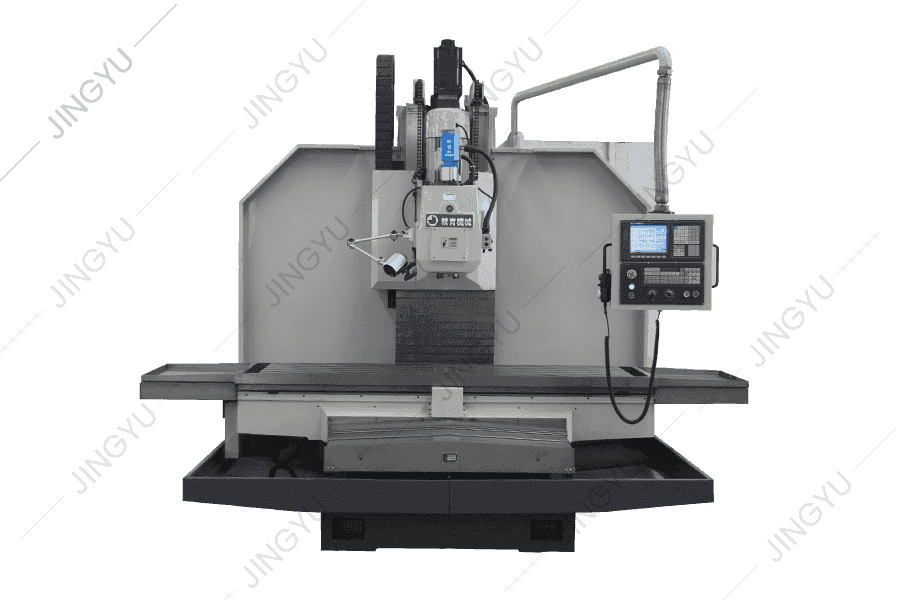 XKV1800 CNC Vertical Reinforced Milling MachineFor large, awkward single pieces, this vertical reinforced milling platform offers 1800 × 700 × 750 mm travels, hardened guideways and a full-gear spindle.View Product →
The vertical spindle sees what it is doing. Touch-off is direct, the setup sits in front of the operator, and the same spindle that mills a pocket can centre-drill, tap, bore and ream without a refixture. That is why a 3-axis vertical machining centre with an automatic tool changer became the default first CNC in most job shops.
On a well-built machine, expect positioning accuracy around ±0.005 mm and repeatability near ±0.003 mm across the work envelope — but read the datasheet rather than the brochure, because those figures are quoted per axis, at a stated ambient temperature, with the machine warmed through.
The awkward middle ground — deep ribs, tall thin walls, intricate 3D surfacing — is where machine structure matters more than spindle orientation. That is the territory of reinforced milling platforms, and the contouring and intricate-design work handled on reinforced milling machines shows what that extra structure buys in practice.
 XKVM1800 CNC Vertical Machining CenterA reinforced precision milling center for large parts, with 24-tool BT50 magazine, 18.5 kW spindle and 1800 × 700 × 750 mm travels.View Product →
| Consideration | Horizontal | Vertical |
|---|---|---|
| Spindle orientation | Parallel to the table | Perpendicular to the table |
| Common cutters | Arbor-mounted slab, side and slotting cutters; face mills | End mills, ball-nose, drills, taps, boring heads |
| Rigidity in deep slotting | High — cutter supported at both ends | Moderate — limited by tool overhang |
| Chip evacuation | Gravity-assisted, generally good | Chips pool in pockets; needs coolant or air |
| Faces per setup | Three or four with a tombstone | One, or three to five with a 4th axis |
| Setup speed for one-offs | Lower | Higher |
| Relative machine price | Higher | Lower |
| Best fit | High volume, deep cuts, heavy parts | Mixed volume, complex detailing |
The ratings below are a working judgement for general-purpose machines in the 5–15 kW class, not a substitute for a cutting trial on your own material.
A horizontal machining centre commonly costs 30 to 80 percent more than a vertical machine of similar work envelope once pallet changers, tooling and foundation work are included. The vertical machine's lower price is real, but so is the labour it hides: extra setups, more fixtures, more part handling and the second operation that always appears the week before delivery.
The honest comparison is cost per finished part. Take one part family and work it through:
That six-minute gap is worth roughly 7.50 at a 75 per hour loaded rate. Against a 90,000 price difference, the horizontal needs about 12,000 parts to pay for itself — three and a half years at 300 parts a month, one year at 1,000. Below roughly 150 parts a month the vertical keeps the capital in your account and still ships parts on time. Run the arithmetic with your own cycle times; the crossover is very sensitive to batch size and to how much fixturing can stay bolted to the tombstone between jobs.
There is a people risk too. Horizontal setups reward planning: fixture offsets, tombstone loading, tool-life management across four faces. If one programmer holds all of that knowledge, it belongs in the decision, not in the footnotes.
Rolls, sleeves and shafts break the usual assumption that the workpiece sits still on a table. The work is held between centres and rotated while the tool feeds along the barrel, so the horizontal-or-vertical question becomes a question about how the cutting head approaches the surface.
For roll shops the practical answer is usually a purpose-built machine rather than a general machining centre. A high-precision mill roll lathe combines barrel turning with a driven milling head for keyways, flats and shallow grooves, so the roll is set up once instead of twice. Where the grooves are the product — crescent grooves and contour ribs on steel bar rolls, for instance — the cutting head normally rides on a heavy, close-coupled ram that keeps a formed cutter rigid at full depth of cut.
On such machines the vertical variant carries the milling head on a column above the roll axis, while the horizontal variant feeds the cutter parallel to that axis. The deciding criteria stay the same as on a flat part: how deep the cut goes, how much room the fixture needs, and how often the job changes.
Neither layout is the modern one. Horizontal milling holds its place because a supported cutter cuts deeper and stays straight; vertical milling holds its place because the operator can see the work and reach every feature without refixturing. Match the spindle to the dominant operation in your part family, price the setups as honestly as you price the iron, and the choice stops being a matter of taste.
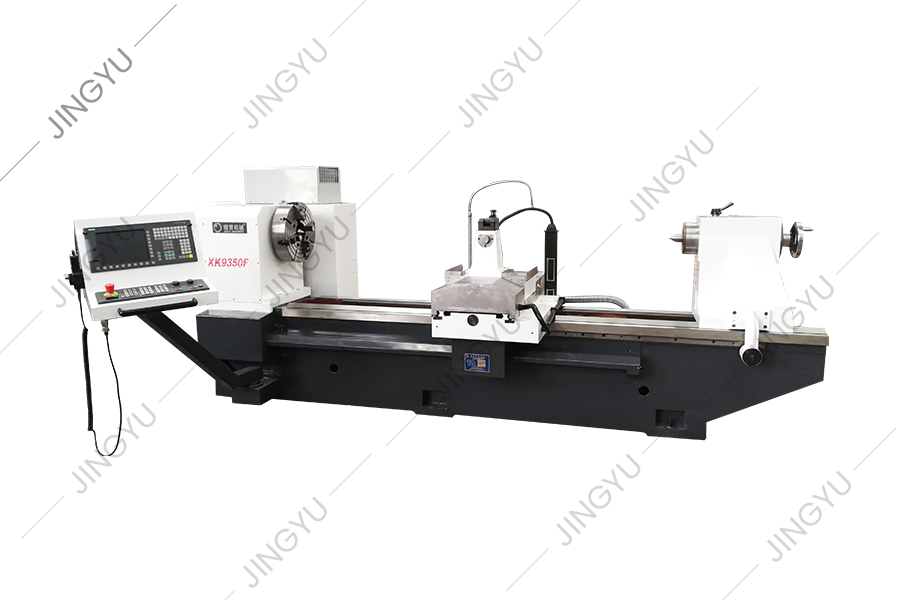
XK9350 series CNC rebar roll crescent groove milling machine is the upgraded product of XK500 type, which is suitable for processing rolls with diamet...
See Details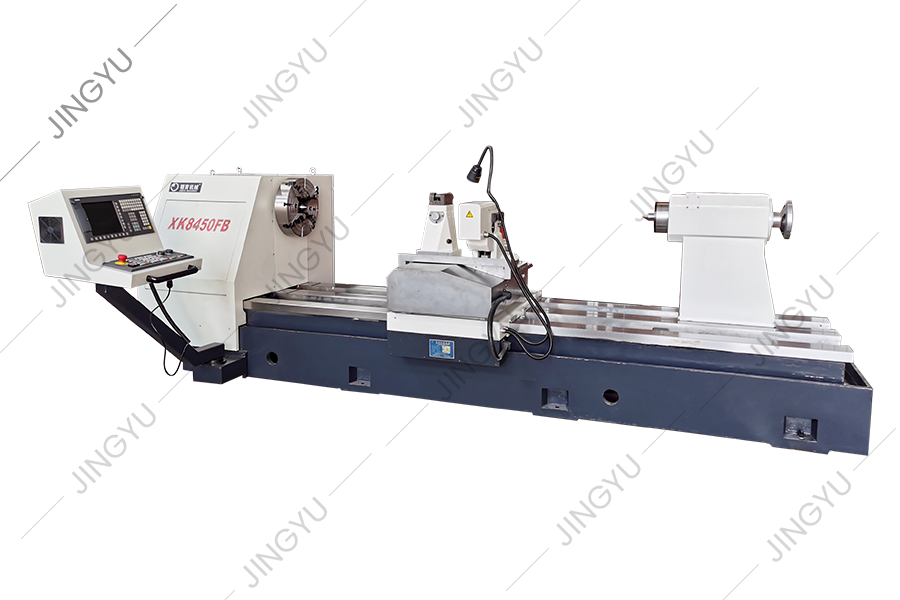
This series of machine tools can automatically cut crescent grooves with different rotation directions and any helix angle. It can divide into equal (...
See Details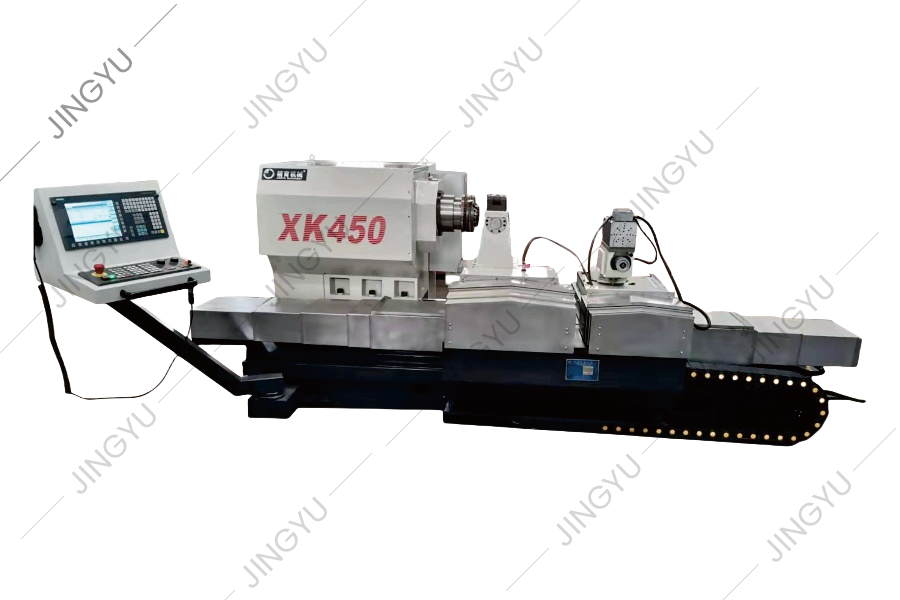
We have accumulated rich experience in the processing and use of rebar rolls, and have conducted in-depth analysis and research on the technology of s...
See Details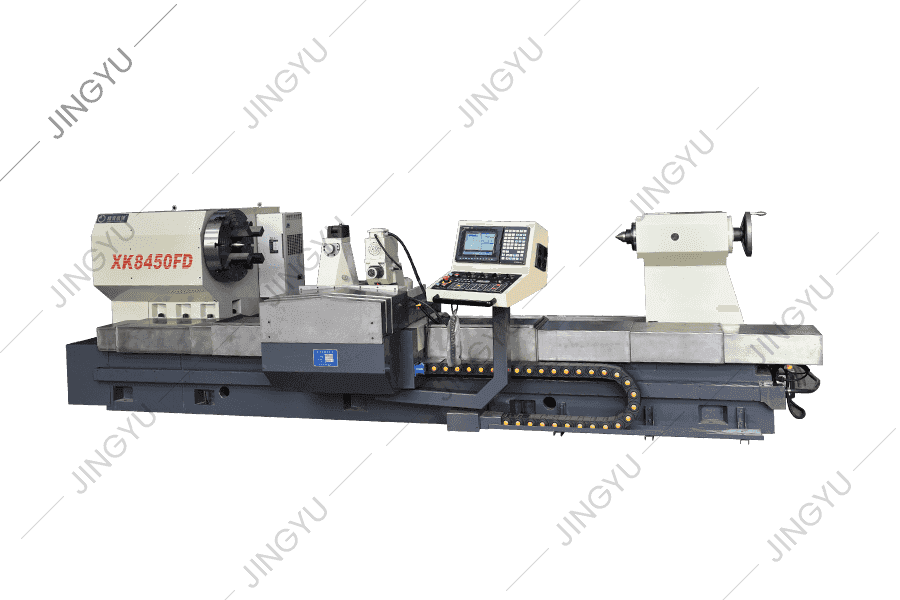
In view of the problems of high speed steel roll processing, XK8450 CNC roll milling machine is a new type of CNC roll groove processing machine tool ...
See Details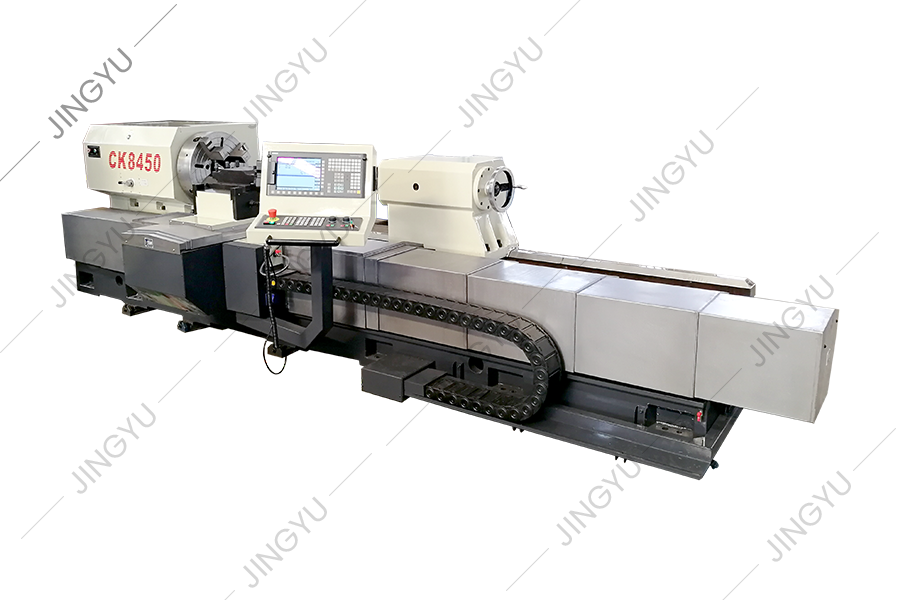
This series of machine tools is mainly used to pass and process rolls. It can also turn the outer circle and roll neck of rolls, and can also turn par...
See Details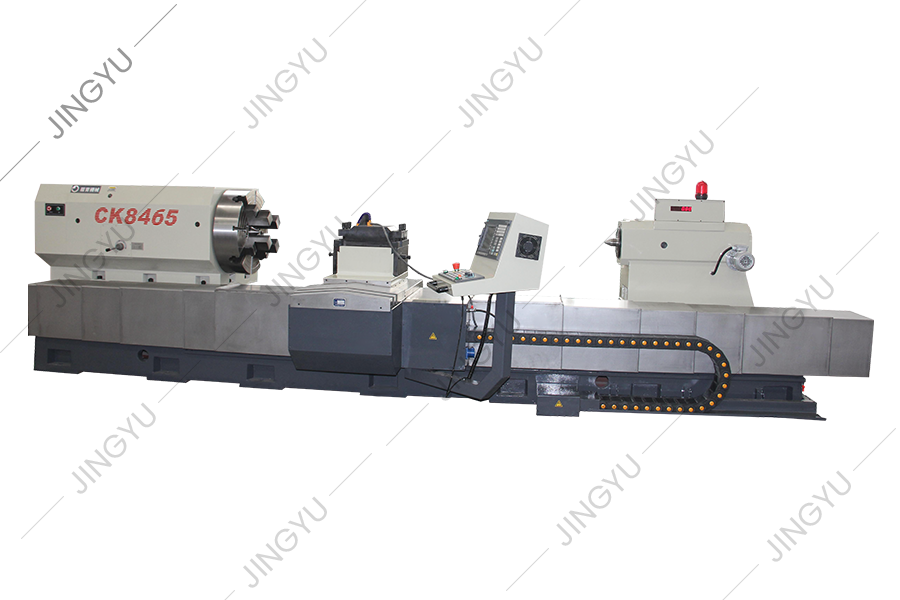
CK8465H CNC roll lathe bed adopts a 2+3 heavy-duty linear rolling guide structure, that is, two rectangular guide rails arranged horizontally on the b...
See Details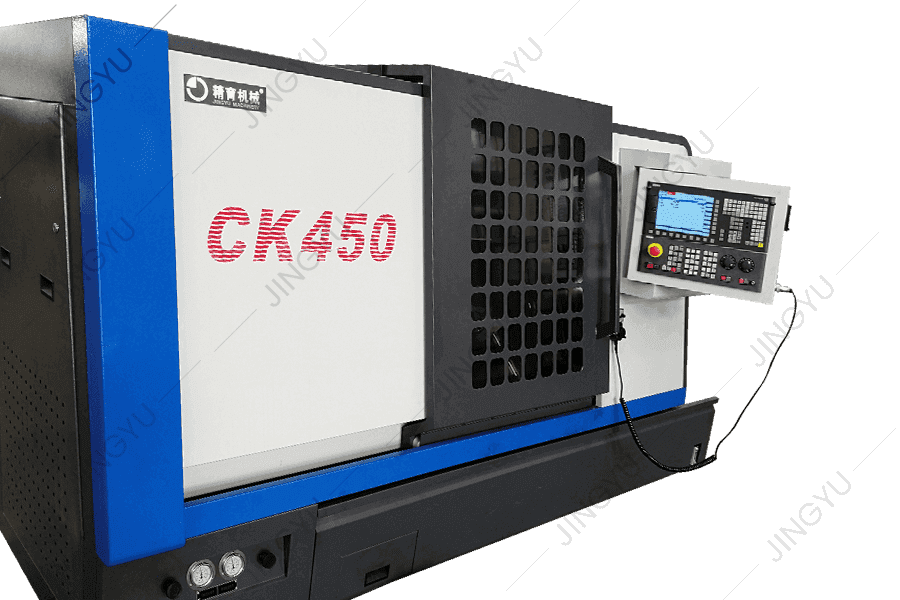
The CK450 inclined bed CNC lathe adopts the German Siemens control system. The appearance, operating system, and safety protection system of the machi...
See Details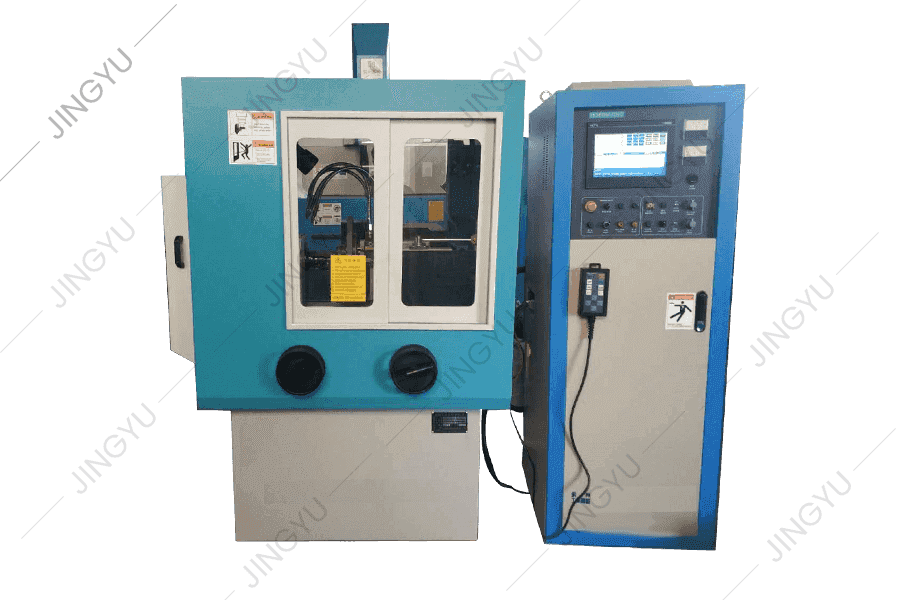
MX250 is a standard diamond wheel dressing machine, used for forming and dressing diamond wheels for metallurgical steel mills. The diameter of diamon...
See Details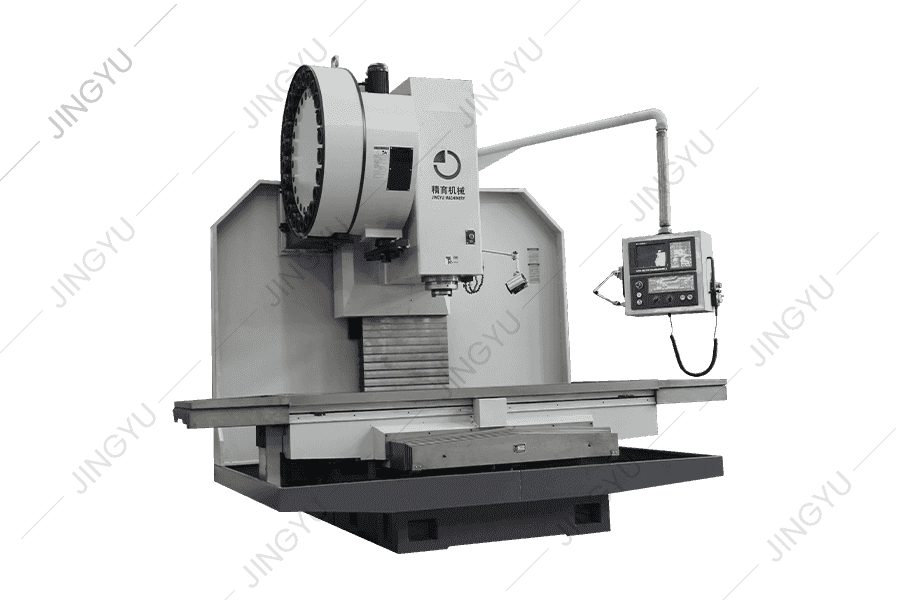
All three axes of the machine are P3-level 50×P10 ball screws, and the assembly process of 2-end fixed pretension is used to strengthen the axial rigi...
See Details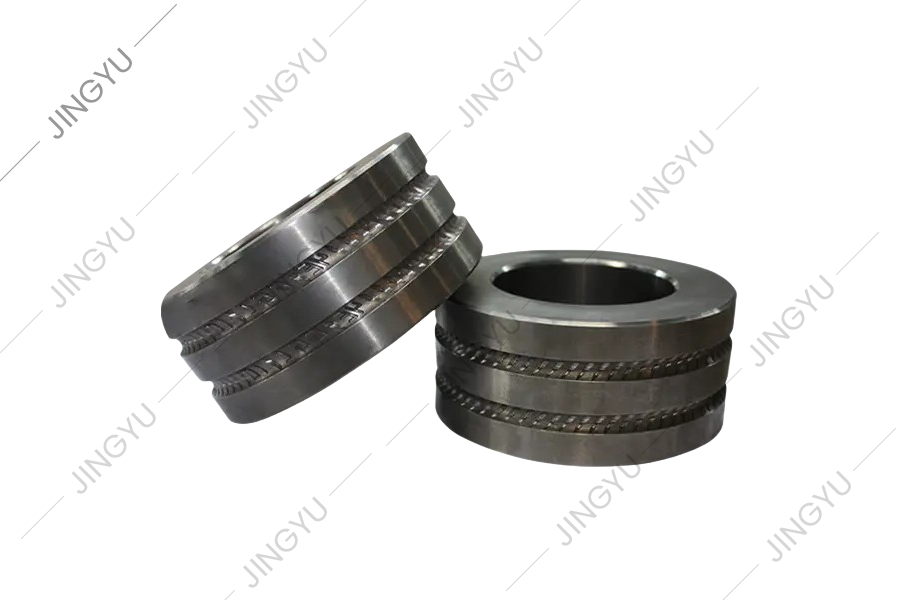
This series mainly provides common-wearing parts for CNC TC ring grinding machines and composite roll grinding machines, such as mandrels, dynamic and...
See DetailsNo.3, Xinghe Road, Zhaxi Industrial Park, Chongchuan District, Nantong, Jiangsu Province, 226003, P.R.China
info@rolllathe.com jennifergao@rolllathe.com
+86-513-85636116
Copyright © Nantong Jingyu Machinery Co., Ltd. All Rights Reserved
 China Roll Turning Lathe Manufacturers
