


 English
 русский
 عربى
عربى
Cat:CNC Roll Milling Machine
Automatic CNC Roll Milling Machine
In view of the problems of high-speed steel roll processing, the XK8450 CNC roll milling machine is a new type of CNC roll groove processing machine t...
See DetailsFor bearing ring manufacturing (inner and outer races), CNC roller ring lathes produce roundness tolerances of 0.5-2 microns and surface finishes of Ra 0.2-0.4 microns on hardened steel (HRC 58-62). The direct conclusion: select a CNC roller ring lathe based on workpiece diameter range (typically 50-500mm), spindle speed (1,500-8,000 RPM), C-axis positioning accuracy (±0.001 degree), and live tooling capacity (milling/drilling). These specialized lathes use rigid roller guideways (not linear ball guides), hydrostatic or roller bearing spindles, and high-torque direct-drive motors to achieve the stiffness required for hard turning (machining hardened steel without grinding).
A CNC roller ring lathe is distinct from standard CNC lathes in several critical ways. Roller guideways (linear roller bearings preloaded to 0.05-0.1mm) provide 5-10x higher stiffness than standard ball-type linear guides, essential for hard turning where cutting forces exceed 1,000-2,000 N. The spindle uses either hydrostatic bearings (oil film thickness 5-15 microns) or precision angular contact roller bearings (P4 or P2 class), achieving radial runout below 0.5 microns. The machine bed is typically cast iron or polymer concrete (mineral casting) with 2-3x the damping capacity of steel weldments, reducing vibration during interrupted cuts (common when turning bearing rings with oil holes or notches).
The "ring" designation refers to the workpiece shape: bearing rings are thin-walled (wall thickness 3-15mm), large diameter (50-500mm), and require machining from both OD and ID. Specialized workholding (chucks or collets) with low clamping force (0.5-2 MPa) prevents ring distortion; standard chucks would deform thin-walled rings by 5-20 microns. Many CNC roller ring lathes feature dual spindles (main and subspindle) to machine both sides of the ring in one operation, reducing handling-induced distortion. Complete machining time for a bearing ring (OD turning, ID boring, face turning, groove cutting) is 20-90 seconds per part.
| Bearing Size (bore mm) | Max OD (mm) | Spindle Speed (RPM) | Spindle Power (kW) | Typical C-axis Resolution | Live Tooling Options |
|---|---|---|---|---|---|
| Small (10-50mm)-- | 80-- | 6,000-8,000-- | 7.5-15-- | 0.001°-- | Drilling, milling (up to 8 tools)-- |
| Medium (50-120mm)-- | 180-- | 4,000-6,000-- | 15-30-- | 0.001°-- | Milling, grooving, threading-- |
| Large (120-250mm)-- | 350-- | 2,500-4,000-- | 30-55-- | 0.002°-- | Heavy milling, deep drilling-- |
| Extra-Large (250-500mm)-- | 600-- | 1,500-2,500-- | 55-110-- | 0.002°-- | Heavy-duty milling, off-center turning-- |
CNC roller ring lathes enable hard turning (machining hardened steel after heat treatment) as an alternative to grinding. Hard turning replaces rough grinding and reduces total cycle time by 50-70%, with energy savings of 60-80% (0.5-1.5 kWh per part vs. 2-4 kWh for grinding). For bearing rings hardened to HRC 58-62, hard turning using CBN (cubic boron nitride) or ceramic inserts achieves surface finishes of Ra 0.2-0.4 microns—comparable to grinding's Ra 0.1-0.3 microns. Hard turning also eliminates coolant requirements (can be run dry or with minimal MQL), reducing fluid costs and environmental impact. The economic break-even point: for production runs above 10,000 parts per year, hard turning is 30-50% lower cost than grinding due to faster cycle times and lower tooling costs.
However, hard turning requires extremely rigid machine tools. A CNC roller ring lathe for hard turning must have static stiffness exceeding 100 N/micron (100,000 N/mm) and damping ratio above 0.05. Standard CNC lathes (50-70 N/micron) cannot achieve the required surface finish and roundness; they produce chatter marks (50-200 Hz vibration) that exceed bearing specifications. Grinding remains superior for finish tolerances below 0.5 microns and for bearing rings with complex raceway profiles (gothic arch or angular contact). For many bearing manufacturers, a hybrid approach is used: hard turning for OD, ID, and faces, followed by a 10-30 second grinding pass for the raceway only.
The spindle is the heart of any CNC roller ring lathe. For bearing ring machining, spindle runout (radial and axial) must be below 0.5 microns (0.0005mm) to achieve part tolerances of 2-5 microns. Two spindle technologies dominate: hydrostatic (oil film) and precision roller bearing. Hydrostatic spindles use pressurized oil (10-30 bar) to create a 5-15 micron fluid film between the shaft and bearings; they offer zero metal-to-metal contact (infinite life) and vibration damping 3-5x better than roller bearings. However, hydrostatic spindles require an external hydraulic power unit (3-10 kW) and oil filtration to 3-5 microns, increasing complexity and cost by $20,000-50,000.
Precision roller bearing spindles (angular contact, P4 or P2 class) are more common. P2 class bearings have runout of 1.0-1.5 microns; P4 class (more common) has 2.5-3.0 microns. For bearing rings, P4 spindles are acceptable for rings with tolerance class P6 or P5; for P4 bearing rings (precision class), specify P2 spindle bearings. Spindle drive: integral motor spindles (direct drive) eliminate belt or gear transmission errors, offering better C-axis positioning (0.001° resolution). Belt-driven spindles cost less but have 5-10x worse C-axis accuracy (0.005-0.010°) and are unsuitable for live tooling milling operations requiring precise spindle orientation.
The linear guideway technology determines the lathe's stiffness and vibration resistance. Roller guideways (cylindrical rollers running on hardened steel rails) provide 3-5x higher stiffness than ball guideways and are the minimum standard for CNC roller ring lathes. A 45mm roller guideway has static load capacity of 80-120 kN and stiffness of 1,500-2,500 N/micron per block. Ball guideways of the same size have 30-50 kN capacity and 500-800 N/micron stiffness. Hydrostatic guideways (oil film) offer the highest stiffness (5,000-10,000 N/micron) and zero wear, but require the same hydraulic complexity as hydrostatic spindles. For most bearing ring applications, roller guideways are the optimal balance of performance and cost.
Guideway preload is critical for hard turning. Medium preload (3-5% of dynamic capacity) is standard; heavy preload (6-8%) increases stiffness by 30-40% but reduces rapid traverse speed by 20-25%. For CNC roller ring lathes, specify medium preload for general use, heavy preload for dedicated hard turning cells. Guideway lubrication: oil (ISO VG 68-220) with automatic metering (0.05-0.2 cc per cycle) is standard; grease lubrication is insufficient for the high duty cycles (24/7 operation) in bearing manufacturing. Linear encoders (0.1-0.5 micron resolution) on each axis are mandatory; rotary encoders on ballscrews are insufficient due to thermal expansion and backlash.
Modern CNC roller ring lathes include a C-axis (spindle positioning) and live tooling (driven tools) for milling, drilling, and tapping. C-axis accuracy of ±0.001 degrees (3.6 arc-seconds) is required for milling oil holes in bearing rings; standard C-axis accuracy of ±0.005 degrees (18 arc-seconds) is insufficient for precision work. Live tooling spindles operate at 3,000-12,000 RPM with 1-5 kW power, typically using ER20 or ER32 collets (tool diameter 1-20mm). For bearing rings, common live tooling operations include: drilling oil holes (1-6mm diameter), milling lubrication grooves, and cross-drilling for sensors or rivets.
Tool orientation (radial or axial) affects capability. Radial live tools (spindle perpendicular to main spindle) are used for drilling/milling on the OD; axial tools (parallel to main spindle) work on the face or ID. A full-capability CNC roller ring lathe has both radial and axial tool stations, typically 6-12 tool positions in a turret design (12-station turret common). Turret indexing time is 0.2-0.8 seconds per station. For high-volume production (100,000+ parts/year), consider a dual-turret machine (upper and lower turrets) to reduce cycle time by 30-50%. Dual turrets add $50,000-150,000 to machine cost but pay back in 12-24 months.
Thin-walled bearing rings (wall thickness 3-10mm, diameter 50-300mm) require specialized workholding to prevent distortion. Standard 3-jaw chucks distort thin rings by 5-20 microns (enough to reject P5 or P4 class bearings). Solutions include: (1) membrane chucks (flexible diaphragm) with multiple contact points (6-12 jaws) and clamping force 0.5-1.5 MPa; (2) magnetic chucks for steel rings (200-500 N clamping force, uniform distribution); (3) expanding mandrels (for ID clamping) with segmented sleeves; (4) hydraulic chuck with low-pressure (10-30 bar) and stroke limiting (0.3-0.5mm). For highest precision (P4 class rings), use diaphragm chucks with 0.3-0.6 MPa air or hydraulic actuation.
Clamping force optimization: calculate required clamping force from cutting forces (F_cut = 500-2,000 N) plus safety factor 2-3; then use the minimum force that securely holds the part. For a 100mm OD ring with wall thickness 5mm, required chucking force is 400-600 N at each jaw. Excessive force (over 1,000 N) causes elliptical distortion (2-15 microns out-of-round). Measure part roundness after machining while the part is still chucked, then again after unchucking; if roundness changes by more than 1-2 microns, clamping force is too high. For automation, use servo-controlled chucks that adjust force per part based on measured wall thickness.
Hard turning of bearing rings (HRC 58-62) requires CBN (cubic boron nitride) or ceramic (Al2O3+TiC) inserts. CBN inserts (CBN content 50-90%) provide the best tool life: 60-120 minutes of cutting per edge at cutting speeds of 100-200 m/min (1,500-3,000 RPM on 50mm diameter). Ceramic inserts (e.g., Al2O3-TiC, Si3N4) are less expensive but have shorter life (15-40 minutes per edge) and require higher cutting speeds (200-400 m/min) to avoid built-up edge. For bearing rings with interrupted cuts (oil holes, notches), specify CBN inserts with chamfered or honed edges (0.05-0.10mm edge preparation) to prevent chipping.
Cutting parameters for typical bearing ring materials (52100 steel, 100Cr6, or equivalent): depth of cut 0.1-0.5mm (finish pass 0.05-0.15mm); feed rate 0.05-0.15 mm/rev; surface speed 100-200 m/min for CBN, 200-400 m/min for ceramic. Coolant: hard turning can be done dry (CBN is thermally stable to 1,200°C) or with minimal quantity lubrication (MQL, 5-20 ml/hour). Flood coolant is not recommended—thermal shock cracks CBN inserts. For surface finish (Ra 0.2-0.4 microns), use wiper inserts (flat geometry with a 0.2-0.5mm wiper flat) that "wipe" the surface to reduce roughness by 30-50% at high feed rates. Check insert wear every 50-100 parts; replace when flank wear exceeds 0.1-0.15mm or when surface finish degrades.
CNC roller ring lathes generate significant heat from spindles, motors, and cutting, causing thermal expansion of machine components. Without thermal compensation, a 1°C temperature rise in a 500mm machine axis expands by 6 microns (steel) or 12 microns (cast iron), exceeding bearing ring tolerances. Solutions: (1) oil or water cooling of spindles and motors (constant temperature 30-35°C); (2) coolant circulation through machine base (polymer concrete has 5-10x lower thermal expansion than steel); (3) thermal compensation software using 4-8 temperature sensors (thermistors) on critical machine points. A well-compensated CNC roller ring lathe maintains part size within ±2 microns over 12-hour production runs despite ambient temperature changes of ±5°C.
For precision bearing rings (P4 class), environmental control of the machine shop is essential. Maintain shop temperature at 20°C ±1°C, with air conditioning or HVAC capable of 10-20 air changes per hour. Machines should be placed away from windows, doors, or heat sources (ovens, furnaces). Measure and record part size every 30-60 minutes; if size drifts beyond ±1 micron, check machine temperature and adjust thermal compensation parameters. Machines with water-cooled spindles and cast iron/polymer bases can maintain 1-micron stability for 8-12 hours without operator intervention; air-cooled machines typically require compensation every 2-4 hours.
High-volume bearing production requires automated loading and unloading of CNC roller ring lathes. Typical automation: gantry loader (2-3 axes) or 6-axis articulated robot (payload 10-50 kg) with double gripper (load/unload simultaneously). Automation reduces cycle time by 20-40% (robot loads new part while machine finishes previous part) and eliminates operator-induced variation. For rings prone to distortion, specify soft-touch grippers (urethane or rubber pads) with force limiting (20-100 N) to prevent marking or distortion. A robot cell serving 2-4 CNC roller ring lathes costs $100,000-300,000 and typically pays back in 12-24 months via labor savings (2-4 operators eliminated) and increased throughput.
Part orientation and inspection: automation systems should include a part orientation station (vision camera or mechanical pre-aligner) to ensure correct ring orientation (oil holes, markings) before chucking. Post-machining, parts can be routed to an automatic inspection station (air gauge or laser micrometer) measuring OD, ID, width, and roundness. Feedback from inspection to the CNC compensates for tool wear (offset adjustment every 50-200 parts). For lights-out manufacturing (unattended operation), the automation system must handle tool changes (automatic tool changer with 30-60 tool capacity), part quality verification, and chip evacuation (conveyor to skip or bin).
To maintain bearing ring tolerances, CNC roller ring lathes need in-process gauging. Touch probes (contact, accuracy ±0.5-1.0 micron) measure part dimensions while still chucked; measurements are used to adjust tool offsets automatically (closed-loop control). For high-volume production, use air gauging (non-contact, 0.1-0.2 micron resolution) for OD and ID measurements, with 1-5 measurement points per part cycle time (5-15 seconds). Air gauges require clean, dry air (5-7 bar, filtered to 0.01 microns). Parts that measure out-of-tolerance are rejected automatically, and the control system may trigger a tool change or process alarm.
Statistical process control (SPC) software collects measurement data from every part or every N parts. Control limits (X-bar and R charts) detect process shifts: if 7 consecutive parts trend up, tool wear is indicated; if sudden jump >3 sigma, tool breakage or foreign object. For P4 class bearing rings, CpK must exceed 1.33 (process capable). If CpK drops below 1.0, investigate machine condition, tool wear, or material variation. SPC software costs $2,000-10,000 but prevents catastrophic quality escapes (100,000+ bad parts before discovery). For ISO/TS 16949 (automotive bearing) certification, in-process SPC is mandatory, not optional.
CNC roller ring lathes require rigorous maintenance to maintain sub-micron accuracy. Daily: check coolant/oil levels, clean chips from guideways, verify part size against master ring (1-2 parts per shift). Weekly: check guideway lubrication (oil consumption should match setpoint), inspect spindle drive belt tension (if belt-driven), clean and recalibrate tool setter. Monthly: measure machine level (precision level, 0.02mm/m accuracy), check ballscrew backlash (laser interferometer, <2 microns acceptable), verify C-axis accuracy (calibrate with precision angle encoder). Annually: recertify machine with ballbar test (circularity <5 microns), replace hydraulic oil (hydrostatic spindles/guideways), calibrate all temperature sensors and linear encoders.
Tool condition monitoring: cutting force sensors (dynamometer) or spindle load monitoring detects insert wear: when spindle load increases 15-20% from baseline, replace the insert. For CBN inserts, typical life is 60-120 minutes of cutting (3,000-6,000 parts at 3-5 seconds per part). Keep a tool life log; replace inserts before failure (surface finish degradation occurs 10-30 parts before catastrophic breakage). For lights-out operation, use a tool breakage detection cycle (light touch probe contact) every 50-100 parts; broken tools cause scrapped parts and potential machine damage.
Modern CNC roller ring lathes incorporate energy-saving features. Total power consumption: 15-40 kW for a medium-sized machine (200mm capacity), of which 30-50% is spindle motor, 20-30% is hydraulics (if equipped), 10-15% is coolant pumps, and 10-20% is controls and auxiliary systems. Energy consumption per bearing ring: 0.1-0.3 kWh per part (hard turning) vs. 0.3-0.6 kWh per part (grinding). Regenerative drives capture braking energy from decelerating spindles (returns to power grid, saving 5-10% of spindle energy). LED machine lighting (50-100W) replaces older fluorescent (200-400W) with better illumination.
For sustainable manufacturing, specify machines with: minimum quantity lubrication (MQL) capability (reduces fluid consumption from 5-10 L/hour to 5-20 ml/hour), dry cutting capability (eliminate coolant for hard turning), and automatic standby mode (machine powers down axes and spindle after 10-30 minutes of inactivity). A CNC roller ring lathe running 6,000 hours per year with MQL instead of flood coolant saves 30,000-60,000 liters of coolant annually. Chip handling systems (conveyor to centrifuge) separate cutting oil from chips, recovering 80-95% of lubricant for reuse. For environmental compliance, specify machines that meet CE or UL environmental standards (hazardous substance restrictions, noise limits below 75 dB(A) at operator station).
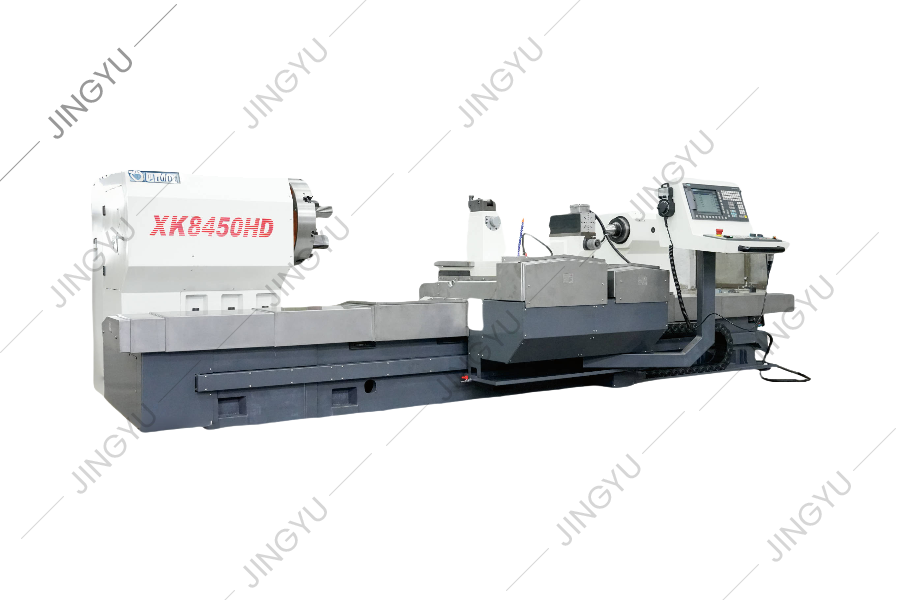
In view of the problems of high-speed steel roll processing, the XK8450 CNC roll milling machine is a new type of CNC roll groove processing machine t...
See Details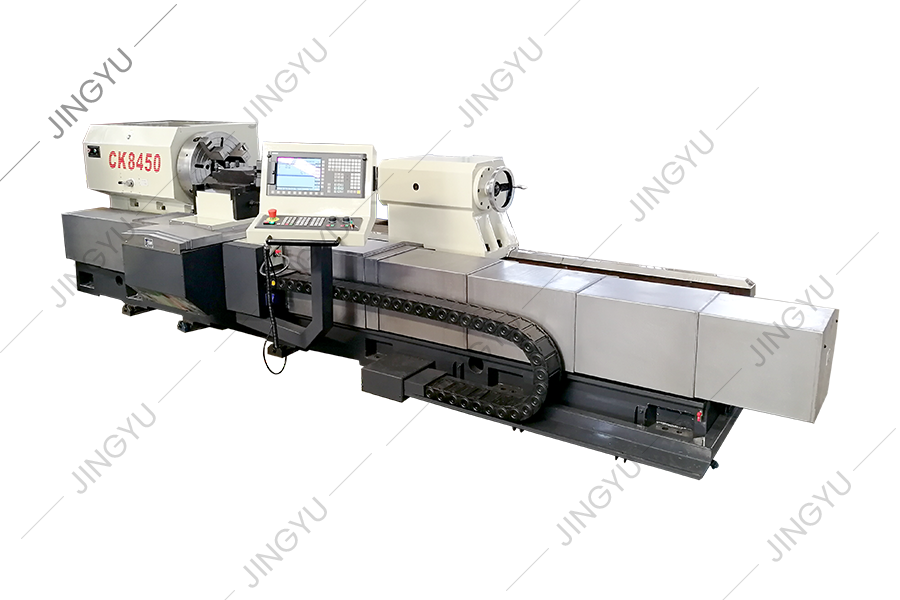
This series of machine tools is mainly used to pass and process rolls. It can also turn the outer circle and roll neck of rolls, and can also turn par...
See Details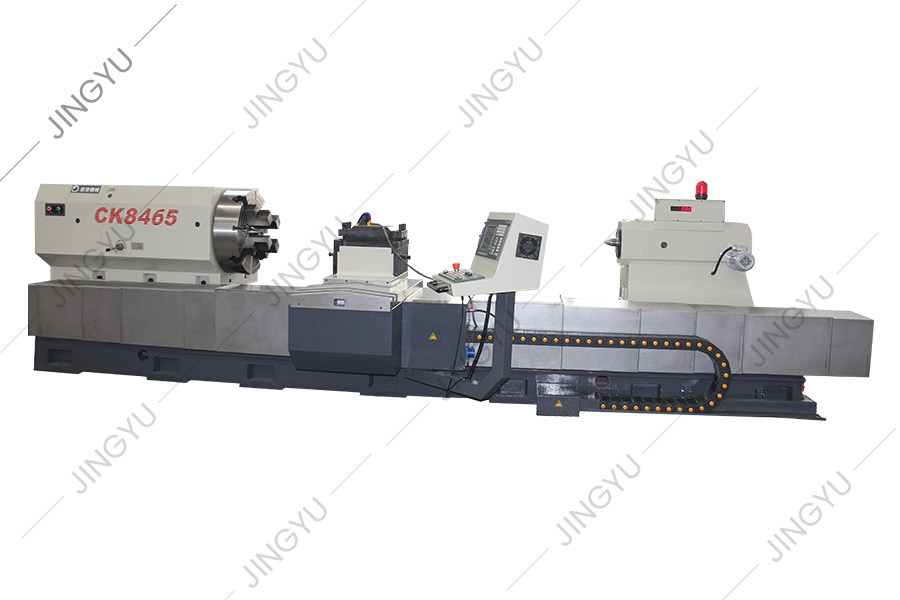
CK8465H CNC roll lathe bed adopts a 2+3 heavy-duty linear rolling guide structure, that is, two rectangular guide rails arranged horizontally on the b...
See Details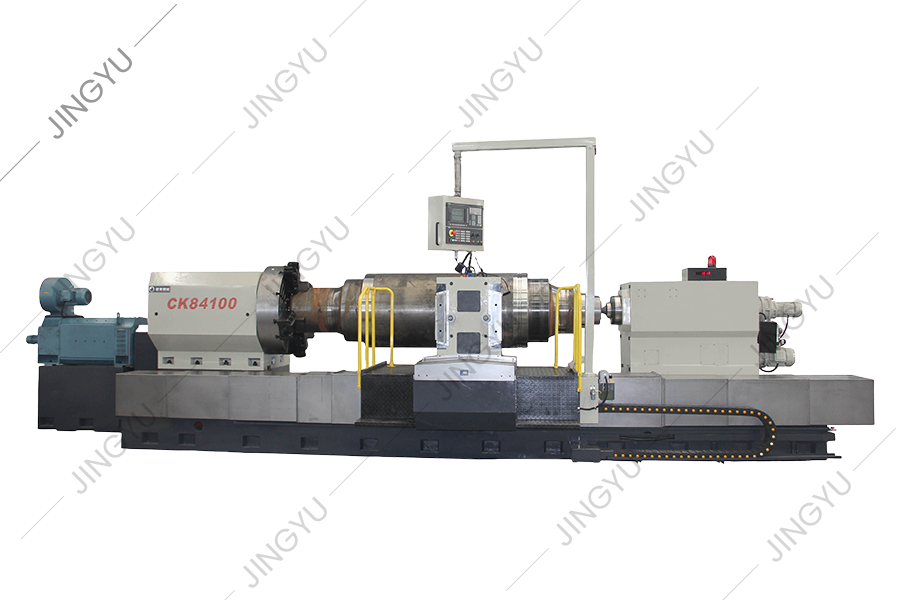
CK84 series CNC roll lathe adopts Siemens 828D CNC system and is driven by a servo motor. When designing this machine tool, we fully analyzed the tech...
See Details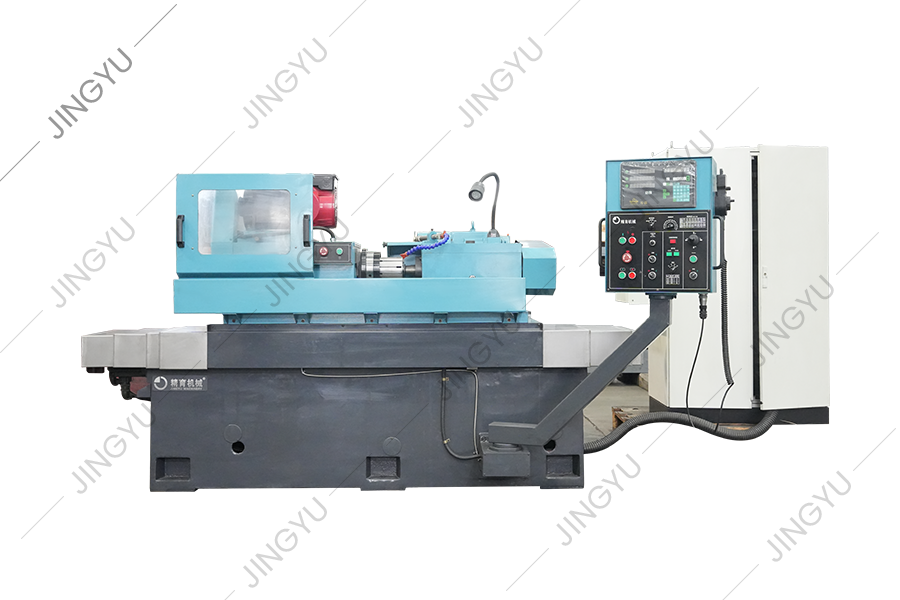
The roll ring forming grinder is mainly used for grinding tungsten carbide roller rings for high-speed wire rod production. The formed diamond grindin...
See Details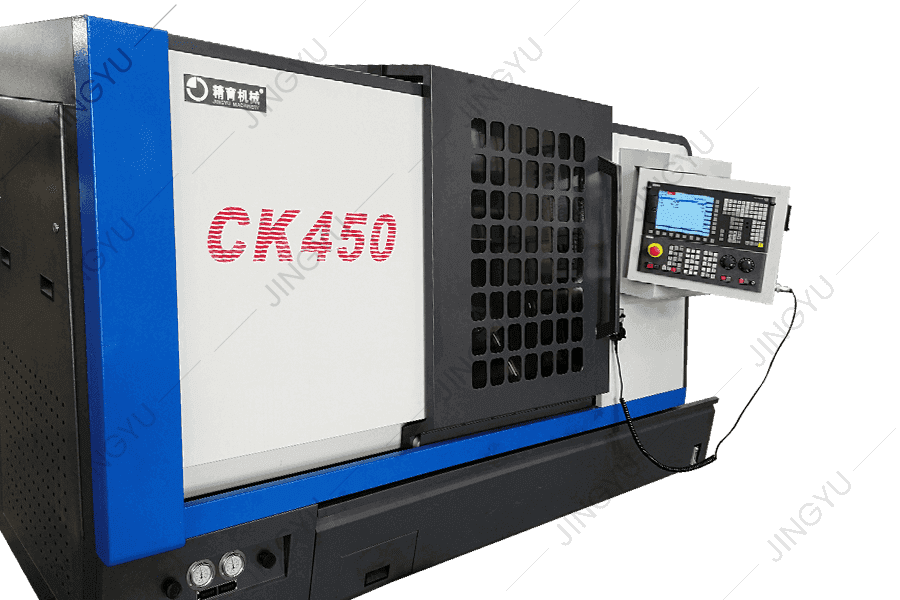
The CK450 inclined bed CNC lathe adopts the German Siemens control system. The appearance, operating system, and safety protection system of the machi...
See Details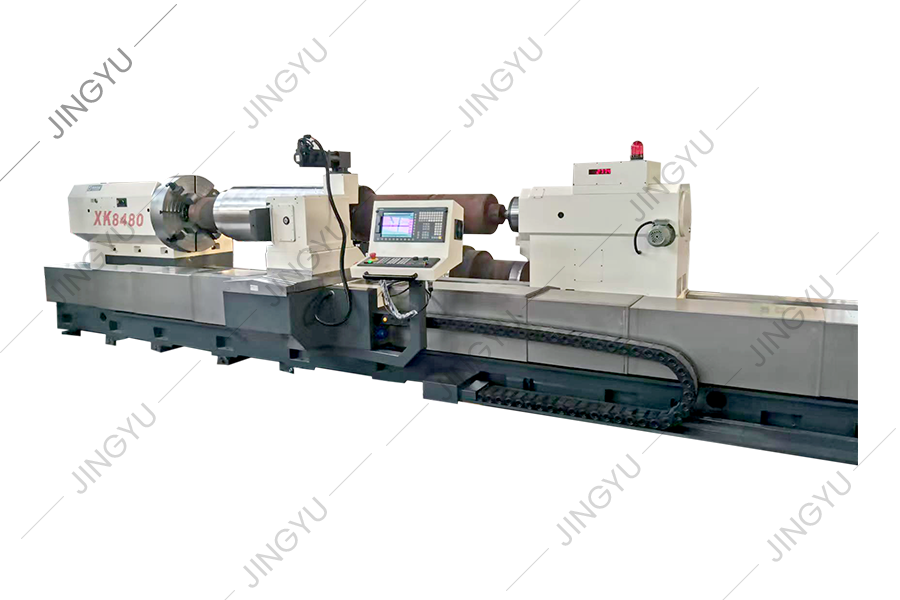
At present, pattern roll engraving at home and abroad generally adopts electrolysis method, ordinary horizontal milling machine milling and other proc...
See Details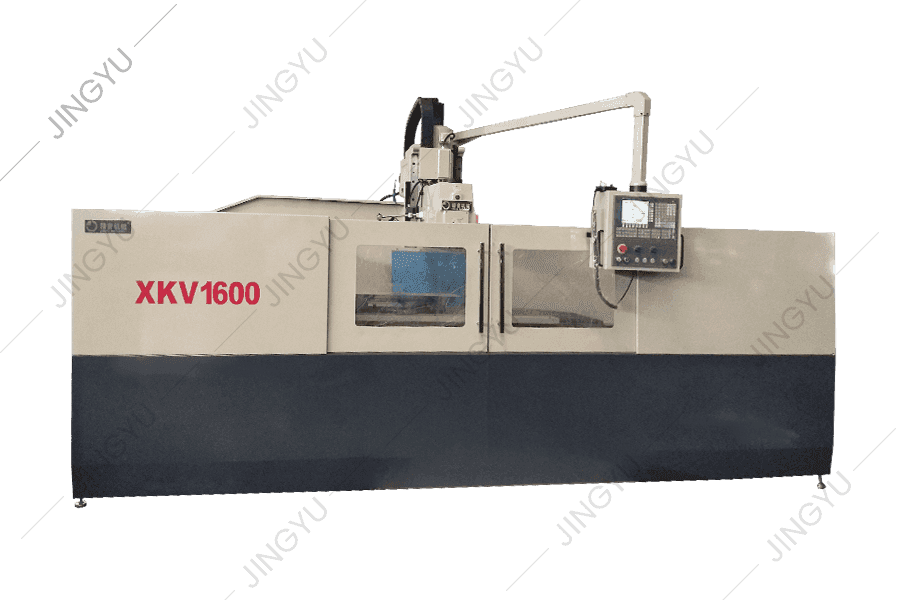
The CNC-reinforced milling machine adopts a full-gear spindle box, and the spindle transmission part adopts gears with precision of more than 6 levels...
See Details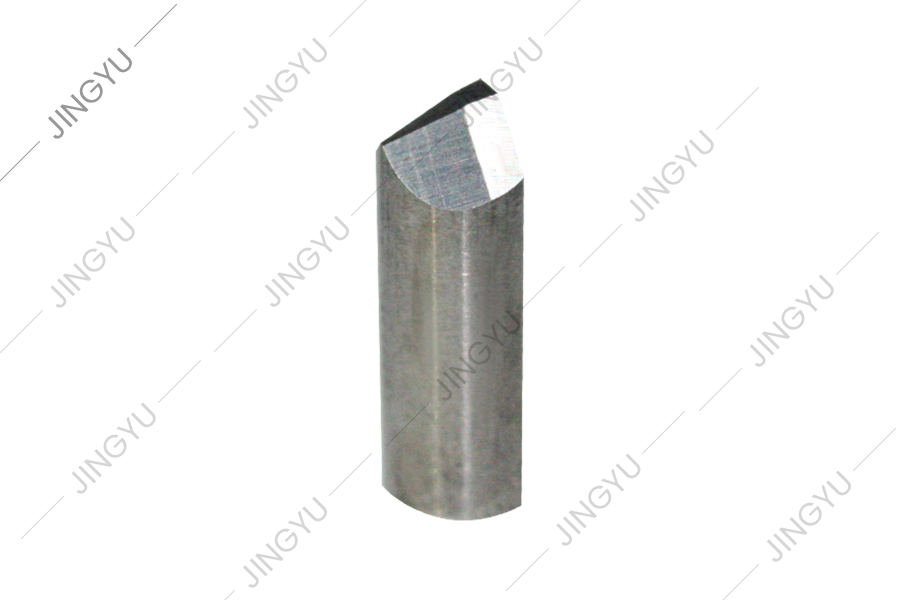
This series is mainly for CNC crescent groove milling machines to provide common-wearing parts, such as milling tool holders, milling cutters, support...
See Details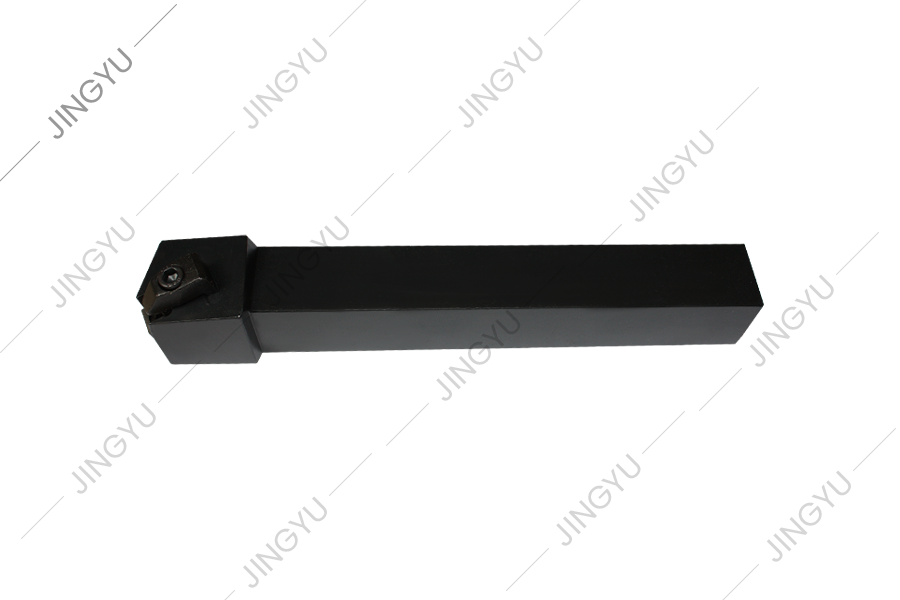
This series mainly provides common-wearing parts for CNC roll lathes, such as CBN blades, PCD blades, chucks, screws, etc.
See DetailsNo.3, Xinghe Road, Zhaxi Industrial Park, Chongchuan District, Nantong, Jiangsu Province, 226003, P.R.China
info@rolllathe.com jennifergao@rolllathe.com
+86-513-85636116
Copyright © Nantong Jingyu Machinery Co., Ltd. All Rights Reserved
 China Roll Turning Lathe Manufacturers
